
Showing posts with label My Fathers House. Show all posts
Showing posts with label My Fathers House. Show all posts
Tuesday, September 30, 2014


Sunday, March 30, 2014
"It's like sitting calmly on a high voltage power line." My Father's House. The Goodreads. Word.

"Tanzer knocked the wind out of me on this one. He just quietly puts it out there, but the impact still left me breathless. Intimate, insightful, and honest."
Wednesday, August 21, 2013
Shameless, albeit much appreciated Ethel Rohan, yes, that Ethel Rohan, My Father's House Tweet hype. And big thanks to the Ethel Rohan for that.
@BenTanzer Loved MY FATHER'S HOUSE, thank you. Rich with nuance, pain, tenderness, grit, and plain and wonderful prose.
— ethelrohan (@ethelrohan) August 18, 2013
Tuesday, June 18, 2013
"One knock-out punch of a line after another." My Father's House gets NAILED. And likes it. A lot.

"To this reader, it feels as though a lesson is learned in every chapter. The narrator may not always understand what he is processing, but the reader has a deep sense of the working of the narrator’s mind. It is a good place to spend an afternoon. Ben Tanzer displays his ability to balance the darker moments of grief with a humble sense of humor. It is not only Tanzer’s sensitive wit, but the timing and delivery of his humor within the structure of the narrative, which helps ensure the impact of the more dramatic moments."
Sunday, June 16, 2013
"It felt like a cleaning of the slate and of properly saying goodbye." My Father's House gets a much appreciated Father's Day Fiction shout-out from TNBBC's The Next Best Book Blog.

"And I felt it was a true reflection of the chaotic feelings that rush through you from moment to moment, day to day, when preparing yourself for the ultimate and unavoidable loss of someone you can't imagine living without."
Monday, May 20, 2013

Wednesday, January 2, 2013
"Fresh, unexpected, and intentionally unsentimental." My Father's House gets Chicago Ex-Patriated. And likes it. A lot.

Quite a lot. Big thanks to Jamie Yates for the kind and insightful words and drinks on us for sure when next we meet. Cool? Good. Excerpt? Word.
"As I mentioned before, the narrator is emotional without veering into needlessly sentimental ruminations. As the novella unfolds, the actions and happenings themselves are strong enough to stand on their own without any added emotions. This is evident from the very beginning. The work is established with clinical details, and Tanzer is smart enough to let the reader determine his or her own emotional involvement in the proceedings."
Wednesday, September 5, 2012
New joint. Something Special. Excerpt. My Father's House. And big love for the Solarcide.

Thursday, July 12, 2012
"Tanzer’s prose is clean and clear. He gets to the heart of each scene, each conflict, without wasting a moment." My Father's House gets Murder Your Darlings'd. And likes it. A lot.

"Tanzer’s prose is clean and clear. He gets to the heart of each scene, each conflict, without wasting a moment. He also avoids melodrama in what could easily be an over-the-top book in less capable hands. Tanzer also places the novella in time with cultural references to movies, especially. It’s as though he’s saying that in the looming absence of a father, this narrator looks to the culture at large. Similarly, he doesn’t look to religion or some ethnic denotation for solace; he looks to film, which is an interesting insight into the mores of this generation."
Sunday, June 24, 2012
"Tanzer’s aim is to strip down grief to its essentials." My Father's House gets some Tom Williams Novella Month love. And likes it. A lot.

"For it seems as though that what the book chronicles is all the mess that occurs and accumulates and one tries to run from but that in the end must be dealt with in order to move on. And of course, it’s Ben Tanzer: so it’s funny in all the right places, kinda sexy in a wrong, wrong, wrong kind of way, and replete with references to the Knicks of Pat Ewing."
Friday, June 15, 2012
"My Father's House is an affecting meditation on how we can—and sometimes do—become better versions of ourselves." My Father's House gets The Collagist'd. And likes it. A lot.

"It offers an important reminder that we are all artists in our own way, if only on the canvas that is our life, and that we create the finest art the more connected to the world and ourselves we are. It is a brave look at how fear binds us, and all that is to be gained when we let ourselves feel even the most painful truths. It is an ambitious work and it succeeds. In My Father's House are many mansions; every one of them is worth exploring."
Thursday, June 7, 2012
This Book Will Change Your Life - Half A Life by Darin Strauss.

Read. Travel. Rinse. Repeat. You know the drill. Our drill anyway. And so it is that we have read Half A Life by Darin Strauss, not so much a rumination on death, as much a rumination on living with death, a death you directly played a role in, if not outright caused. Which is different, much different than musing about the death of someone that you had nothing to do with, the death, not the person, and can't escape. And yes, we are projecting here, thinking about My Father's House and the recent interview we did in Rain Taxi. In that interview we talked about listening to Strauss talk about Half A Life. Strauss commented on how it had to be a memoir, and listening to him made us think about how the foundational material in My Father's House had ultimately felt like it had to be fiction, that we needed more latitude than real life seemed to allow us. Mind you that was before we read the book, and mind you, it's not that we're sure we feel any different now, but we are struck that as intimate and and tortured as one might be regarding the experience of losing someone you love, it seems impossible that it can ever be as intimate or tortured as a death you play a role in. We're also struck that we have absolutely no sense how torturous this must be, and even a book as well-crafted, and moving, as this one feels like it must barely capture what the second half of Strauss' life must have truly been like. Finally, any number of people have commented on how brave Strauss was to write all of this down, and it is brave of course, but it is also what writer's do, especially great writers like Strauss. They write, everything they know, everything they experience, they have to, they have no choice. Given this, we would like to offer a different take on the narrative surrounding Half A Life. And that take is this, what makes Strauss brave, is that even as he has struggled with and against this tragedy, he has somehow been able to live not just a writing life, but any life at all.
Tuesday, May 29, 2012
Wherein we talk My Father's House with the terrific Paula Bomer at Rain Taxi.

PB: Both the narrator and his father have tough guy
personas and yet both are artists, and in the case of the narrator, a
caregiver. There’s a lot of ambivalence about masculinity and what it
means, how confining it can be but also how necessary. Eventually, your
narrator is allowed all sorts of release—crying, really letting go of
his father, and figuring out what he needs to do next. Perhaps it was
the slow painful aspect of a death by cancer; not to diminish the loss,
but I’ve heard people say about certain deaths, “it was his time.”
Friday, May 25, 2012
"The comparison might appear easy, borderline obvious to you, but I could definitively feel an influence of John Irving in Tanzer's prose." My Father's House gets Dead End Follies'd. And likes it. A lot.
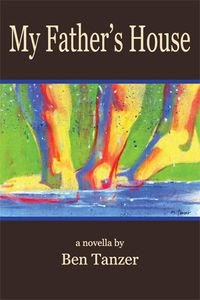
"It's deliberately structured to reward patience and I thought it was pretty clever. The evolution of the narrator's trail of thoughts doesn't appear evident if you read ten pages, but if you read forty or fifty, the transformation becomes noticeable. I appreciated this particularly because it's hard to render the concept of time passing in a book, while being fair to the reader. I thought Tanzer found a very creative way to do so. His chapters are short, but resonate with each other. It's textbook dialogism, I suppose but it's applied to such a minimalistic execution, it makes it beautiful and rewarding to read."
Monday, May 7, 2012
"If his other books have half the power of this book, he has a new fan for life. Thank you, Ben." My Father's House gets Mourning Goats'd. And likes it. A lot.

"If I can offer any recommendation, it's read this book while you're on the treadmill at the gym. Not only will it keep your mind off the burn, but it'll inspire you to go further, the only thing I can apologize for is the looks you'll get when it's not sweat falling down your cheeks, it's tears."
Saturday, April 28, 2012

Friday, April 13, 2012
"Tanzer movingly explores the bewildered, anxious and impulsive thoughts and actions of a young man still trying to figure out his place in the world." My Father's House gets Pete Lit'd. And likes it. A lot.

"The father's fate is a foregone conclusion, but even amidst that great loss the narrator finally begins to make sense of it all, and finds a way to move forward. Which is something that any of us in that situation would wish for ourselves."
Monday, March 26, 2012
We are Davis Schneiderman Big Other interview. We are not Ryan Gosling.

Davis: Discourse the third, please…
Ben: And then most recently, my latest short story collection So Different Now was released by CCLaP
who is based here in Chicago, both as a stand-alone e-collection, but
also combined with an earlier collection I did with CCLaP called Repetition Patterns, a limited edition, hand bound, “hyper-fiction” collection titled The New York Stories. Repetition Patterns
was a series of loosely related small town stories based on growing-up
in upstate New York in a town named Binghamton, a place I know you know
as well (Note: Davis went to grad school there).
Repetition Patterns was very much about teenagers and their
interactions with the town, their parents, and becoming parents
themselves. I did a blog tour for Repetition Patterns and, in
answering questions about those stories, I started getting ideas for new
stories, complimentary stories, and responses to the earlier ones.
These stories became So Different Now and are more focused on those “teenagers” as adults and how the sins of the father impact them, us, in our adult lives.
Thursday, March 1, 2012

Wednesday, February 1, 2012

Subscribe to:
Posts (Atom)